+919393072377
E-Mail: info@thusharaschool.com



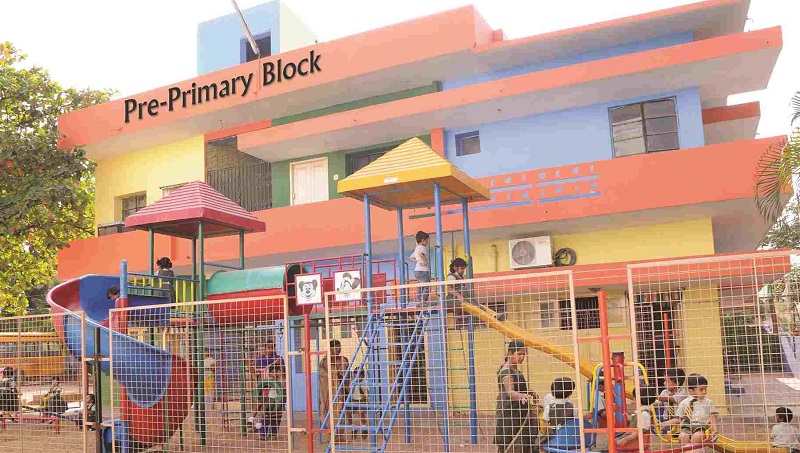
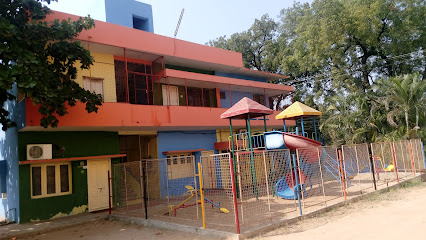
Pre-primary education or learning in the early years is critical for all students. Especially since recent research has shown us that a majority of brain growth and development takes place while children are very young, in fact between the ages of zero and five years!
This means that we as parents, educators, and policymakers must take advantage of these formative years and ensure that our toddlers are engaged in meaningful play and learning so that we are setting them up for success.
Thushara is a school, started with an aim to make learning more interesting and fun for its students by unleashing their minds. At Thushara, the students are taught to become more observant, confident in expressing their views and opinion’s independently and are able to recollect what we teach without the help of textbooks or notes.
The curriculum will help the teacher to reach out to every student in the class and bring about complete involvement of the class. “The more ways we teach, the more children we reach”.
Every intelligence, according to the theory of Multiple Intelligence is touched upon in the way the topic is transacted in the classroom. The children not only gain self -confidence as they are encouraged to ask questions but also become aware of things and happenings around them, in their endeavor to find the answers. Practical activities in the classroom such as Group Projects, Model Making, Role-Play, Demonstration, Experimentation, etc. provide our students with ample opportunities for thought analysis and action. We promote a dynamic learning environment that helps our young Thusharians grow unrestrained. Thushara aims at preparing the child to face all competitive exams and groom all aspirants For IITs and Civil Services Exams

Thushara, as mentioned earlier it is meant for a quality education that make the students to understand the concepts to the core.
Some of the methods are ...
In a student-centric environment, students are the leaders who create the guidelines for the class, design all the extra-curricular activities as well as solve any issues as and when they surface. The students are the brains behind the ideas. This kind of method empowers the students and encourages them to strive hard to achieve all their goals
Each day is divided into “ Learning Blocks”, i.e. long instruction period (75-90 minutes). This enables a teacher to give the students PBL, multi-discipline studies as well as in-depth learning and understanding of content and skills. The focus is on the theme of study and time is available for direct instructions and relevant learning activities. Thus method of learning new concepts differentiate
This method helps students to make use of their knowledge and learning in collaborative projects of various disciplines and which have local as well as global significance. We give students the opportunity to engage themselves in real-world learning.
This method brings learning to life. Subjects are united together under a theme of study and are not taught separately. This develops an interest in the students, encourages them to be curious and motivates them to make a difference. Every class studies a particular topic and includes it in all the subjects.
This method of teaching is where teachers make use of important questions to develop an interest in the students and guide them to develop their own questions with respect to the unit of study. The Inquiry-Based Approach includes teaching, asking questions, planning, research, creating, reflecting and presenting.

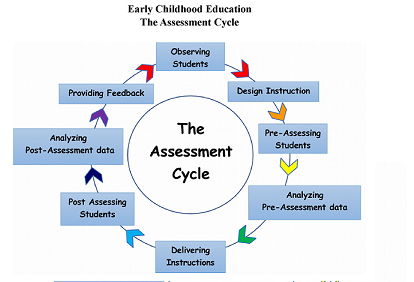
At Thushara, every students progress is assessed continuously. We try to gauge the student not only by the mere fact that they memorize and reproduce what they learn but also by the fact whether they can actually correlate and apply what is learnt. As the evaluation is a continuous affair the culture of `cram for exam’ will be absent.
To avoid inter-comparison between the students, instead of awarding marks, grades are awarded on a ten-point scale. No ranks are awarded to the students. We follow two categories of Evaluation Formal and Informal
To motivate students whose performance is outstanding, an award will be presented once in a year.
Formal evaluation: Regular subjects that are taught to the child in the school are evaluated periodically in the form of oral tests, Formative assessments and summative assessments, for understanding and memory recall.
Informal Evaluation: The Children are regularly monitored and evaluated for various parameters such as LISTENING SKILLS, SPEAKING SKILLS, SOCIAL DEVELOPMENT, FINE MOTOR SKILLS, EMOTIONAL DEVELOPMENT, HOME WORK. SAFETY, PERSONAL NEATNESS, NOTE BOOKS MAINTENANCE at weekly or fortnightly intervals. This will enable the teacher to guide the student to progress in desired track.
The teaching, evaluation of the Primary, Middle and High School will vary as the students main concept is learning. The Primary students are paid more attention about the basic concepts, simple arithmetic and the introduction of languages. More attention is paid towards neat handwriting and proper socialisation
The Middle section students will be learning to emphasise more on conceptualisation, memorising and reconstruct the answers from what they have learnt.
The higher sections will have a lot of things to explore along with the academics. Because, learning is only from the books but also from various sources. The students are encouraged to explore such learning by organising and participating in the events
A systematically organised and planned curriculum along with the faculty who are trained to teach the children by understanding them, enable every child to sharpen their intelligence.
At Thushara, the methodology so designed that there will be no poor learner.
Without deviating from our core values of education, which are based on age-old precepts of education, we adopt multiple intelligence teaching approach of Howard Gardner to enable a student to meet the challenges of the years ahead when the children grow up and enter into adulthood.
According to Howard Gardner a psychologist and professor of neuroscience from Harvard University, human beings have nine different kinds of intelligence that reflect different ways of interacting with the world. Each person has a unique combination, or profile. Although we each have all nine intelligences which are depicted here, no two individuals have them in the same exact configuration. These multiple intelligences can be nurtured and strengthened, or ignored and weakened.
Thushara strives to develop the intellectual capabilities of a child by exploring the ways to identify the child’s abilities and enhancing them through various ways.
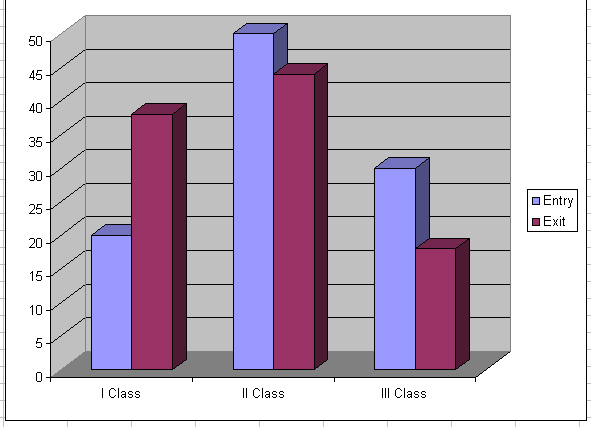
At Thushara, every student’s progress is assessed continuously. We try to gauge the student not only by the mere fact that they memorise and reproduce what they learn but also by the fact whether they can actually correlate and apply what is learnt. As the evaluation is a continuous affair the culture of `cram for exam’ will be absent.
To avoid inter-comparison between the students, instead of awarding marks, grades are awarded on a 0-9 point scale. No ranks are awarded to the students.
An award will be presented once in a year to motivate students with outstanding performance.
Examinations are the burning tests for the students to know their abilities and where they stand and where they need to put more attention to improve themselves. Frequent examinations will keep them engaged with the subject and continuous self evaluation.
A variety of tests will be conducted to make the students to have a practice of writing different types of questions

| S.No | Type of examination | Discription | Type of questions | Marks allotted |
|---|---|---|---|---|
| 1 | Slip Test | After completion of every lesson/chapter | Multiple Choice, Fill in the blanks, Very short, Short and Essay type | 10 |
| 2 | FA (Formative Assessment) | After completion of the first quarter and 3/4 of the academic year | Multiple Choice, Fill in the blanks, Very short, Short and Essay type | 40 + 10 for Assignments/Projects/Neatness |
| 3 | SA-1 (Summative Assessment) | After completion of the first half of the academic year | Multiple Choice, Fill in the blanks, Very short, Short and Essay type | 40 + 10 for Assignments/Projects/Neatness |
| 4 | SA-2 (Summative Assessment) | After completion of the academic year | Multiple Choice, Fill in the blanks, Very short, Short and Essay type | 80 + 20 for Assignments/Projects/Neatness |

Last, but not least. The faculty are strength and the strong foundation on which all the above stand. Hence, the selection of the staff is meticulous in all aspects.
All the teachers are well qualified, experienced, disciplined, dedicated and have a mindset to implement the ideas of the management to reach each and every child to put their best efforts for the allround development of the child
The supporting staff are specially trained about dignified handling of the children and to give personal care to every child