+91 93 93 07 2300
E-Mail: info@thusharaschool.com


"Discipline is about teaching children appropriate behavior and helping them become independent and responsible people. The purpose of discipline is to encourage moral, physical, and intellectual development and a sense of responsibility in children. We believe that children have an innate moral compass that, when nurtured by positive example in an atmosphere of consistency and fairness, will guide them in making good, ethical choices.
Ultimately, as children mature and develop, they will do the right thing, not because they fear external reprisal, but because they have internalized a standard of behavior modeled and reinforced by parents, teachers and other caretakers. In learning to rely on their own resources and to reflect on their attitudes and behaviors, children develop judgment, discernment, confidence and self-respect.
However, discipline comes from the Latin word discipulus or disciplini, which means a follower of truth, principle, or a venerated leader. Children and students will not become followers of truth and principle unless their motivation comes from an internal locus of control, that is, until they learn self-discipline.”
.At Thushara, School assembly is the first point where inculcating the habit of Discipline starts. Our main aim is to inculcate self discipline for every student so that occurrences of behavioral problem in future can be controlled.
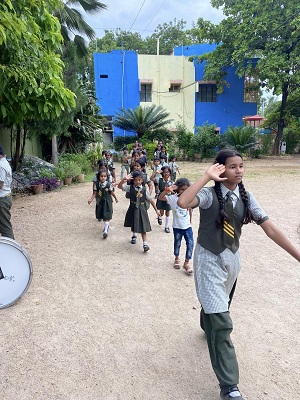 Marchpast
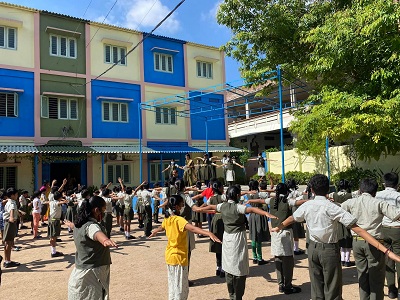 Drill
Drill
 Group Activity
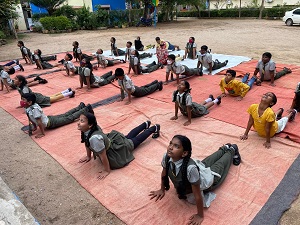
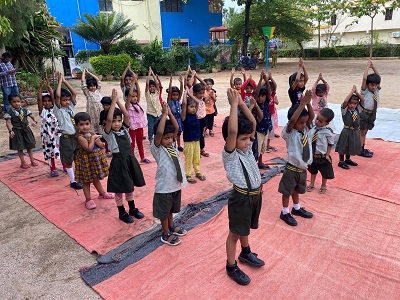 Excercises

At Thushara students of a class are divided up into “houses.” Throughout the school year, kids earn points for their houses for good behavior, special accomplishments, and more. Since each house includes kids from every grade, it fosters a sense of community throughout the school, too.
Students develop a sense of belonging and a feeling of unity in being a part of a specific house. The House system searches for ways that students and staff can feel more connected to and involved with the community around them. It facilitates discussions between the most junior and most senior of school and fostering friendly competitive spirit along the way
 Lead by Mr. Anook, 10th Class
 Lead by Ms. Ananya, 10th Class
 Lead by Mr. Harshith Reddy, 10th Class
 Lead by Ms. Dhaatri, 10th Class
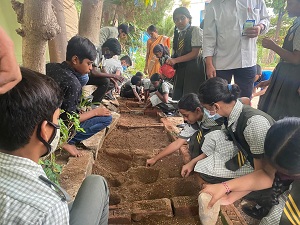
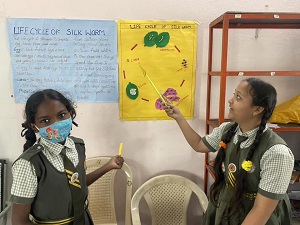
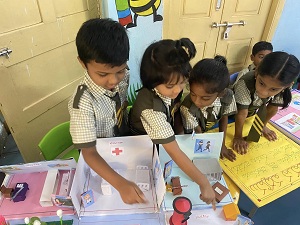
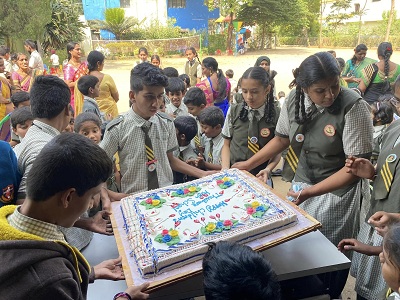
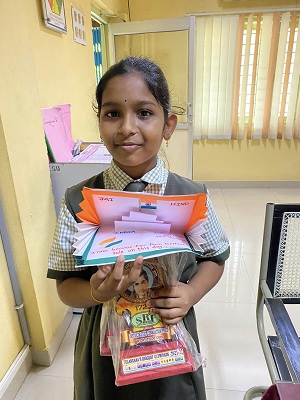
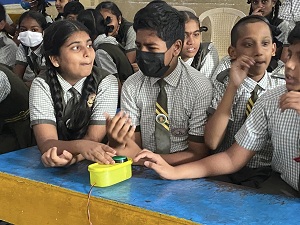
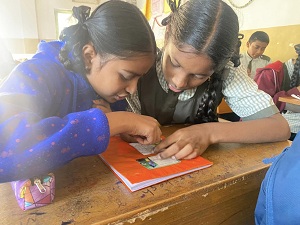
"The common notion that learning can be done best when it is initiated by the surrounding environment and motivated by providing optimum opportunities to learn. A fearless environment and freedom to express always adds to the learning outcomes.
Activity-based Learning helps students express and embrace their curiosity. Once the students become curious, they tend to explore and learn by themselves.
The following are various activities for which opportunities are provided at Thushara
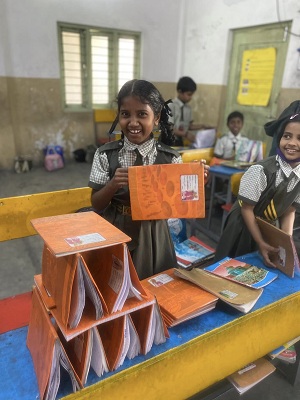
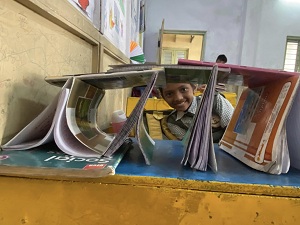


1. STUDENTS NEED TO LEARN. Students want and need to learn as much as they need food, clothing, and shelter. An educator's primary job is to fill that primal need for learning by creating engaging and relevant learning experiences every day. The greatest gift a teacher can give students is motivating them to experience repeated learning success.
2. STUDENTS NEED TO BE ACTIVE PARTICIPANTS IN LEARNING.Students learn best by doing, and active teaching encourages active learning. Teachers should treat students as active participants in the learning process, providing them with skills, such as:
These skills will help them be part of a high-performance learning team. Also, students need to be encouraged to explore and research information beyond the confines of the classroom and textbook.
3. LEARNING IS A PHYSIOLOGICAL ACTIVITY INVOLVING THE WHOLE BODY.The best way to engage a student is to have a solid classroom management plan and a well-planned lesson that is grounded in relevant, purposeful activities designed to enhance that student's knowledge and skills and leave her or him wanting to learn more. Teachers should be strongly aligned with student-centered and student-directed learning that embraces exploration, discovery, experiential learning, and the production of academically rigorous products.
4. STUDENTS NEED TIMELY FEEDBACK TO IMPROVE.Teachers gather data on student performance to adjust the learning environment and instruction so that they can target students' learning needs. Teachers administer pretests to find a starting point for learning and post-tests to determine the students' increase in performance level as well as the teachers' effectiveness.
5. STUDENTS NEED STRUCTURE AND REPETITION TO LEARN.A teacher should be able to organize a standards-based lesson sequence, successfully implement the plan, and then evaluate student learning. A teacher should be able to create an exciting learning environment that makes it difficult for students to not learn. A teacher should know how to include all students in learning at their own level, and a teacher should be able to inspire the students to push themselves to the next level.